



Freight isn't what it used to be: how rising energy costs are making your exports more expensive
October 13, 2026 · Reading time: 5 min
SUMMARY:
The Strait of Hormuz crisis has doubled marine fuel and jet fuel prices in 2026 and pushed European diesel prices to record highs. The result is higher international shipping costs across all modes of transportation: shipping a container costs three times the 2019 average, while trucking costs are up nearly 9% year over year. Here’s what’s happening and how to protect your profit margin on every export shipment.
POST:
Oil above $100, fuel and emissions surcharges, longer routes. In 2026, energy costs are once again determining whether an export shipment is profitable. We look at the numbers and the solutions.
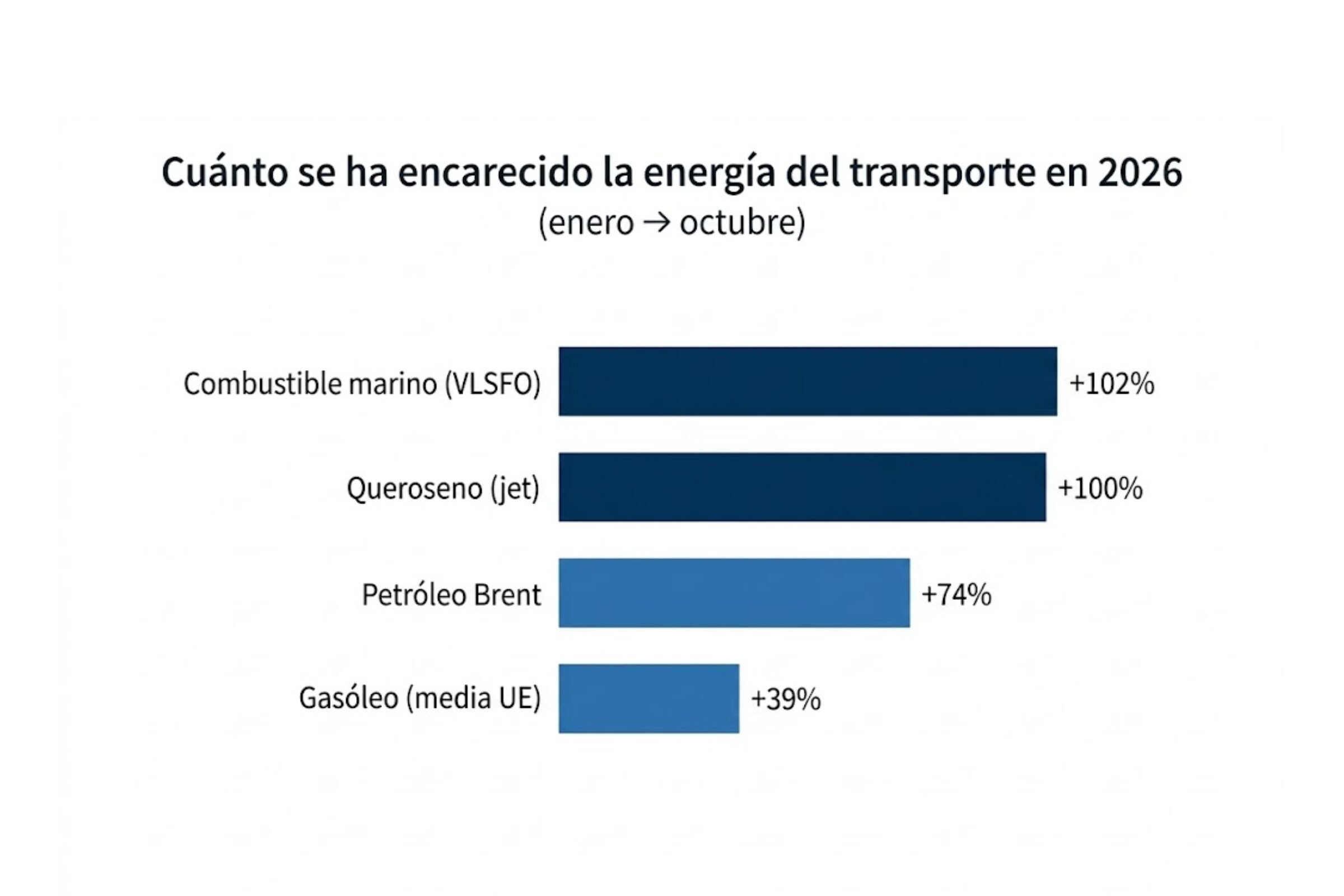
The year began with Brent crude at $61 a barrel. Between March and April, the closure of the Strait of Hormuz sent prices soaring; In June it returned to pre-conflict levels; and since September, with the strait once again restricted and attacks on ships and infrastructure, Brent has been trading above $100: the September average was $114, and it is now around $106. The U.S. Energy Information Administration States (EIA) forecasts an average of $105 for the fourth quarter, $14 higher than its estimate a month ago. For exporters, the problem isn’t the price of a barrel of oil: it’s the knock-on effects. And those effects are substantial.
How much transportation energy costs have risen in 2026
By sea: container shipping costs three times as much as before the pandemic
Marine fuel (VLSFO) has risen from around $475 per metric ton in January to nearly $960 in October. Shipping companies pass these increases on through fuel and “emergency” surcharges, on top of regulatory costs: since January 1, 2026, the EU Emissions Trading System (ETS) has covered 100% of emissions from maritime shipping (up from 70% in 2025). Emissions surcharges on Asia–Northern Europe routes in effect since October range from $170 to $220 per 40-foot container, depending on the shipping company.
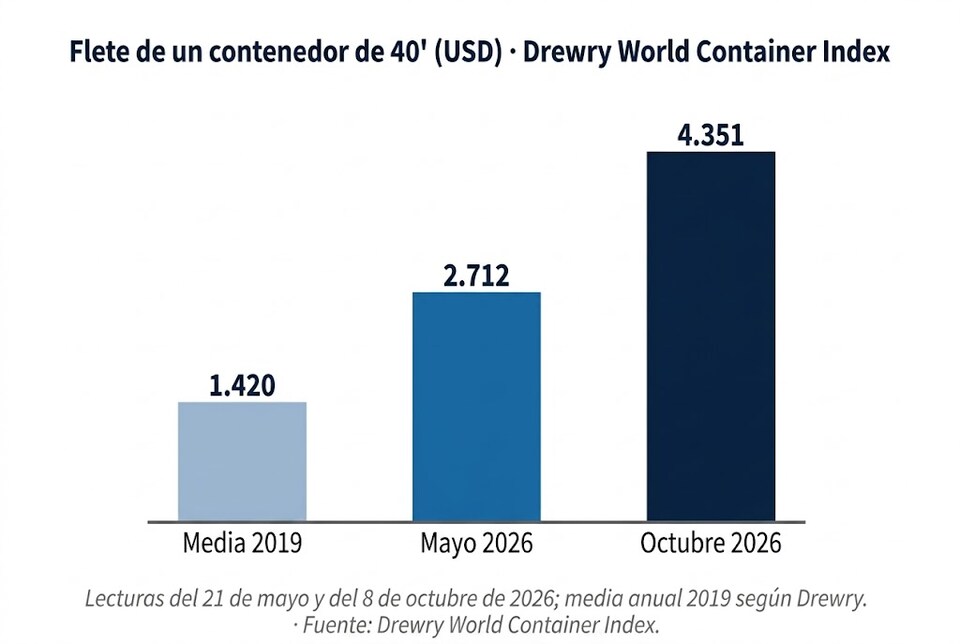
The Drewry World Container Index shows the impact: $4,351 per 40-foot container on October 8, compared with an average of $1,420 in 2019. The Shanghai–Genoa rate is $3,696, while Shanghai–Rotterdam is $3,337. Rates have fallen for 13 consecutive weeks amid weak demand, but shipping companies are already announcing increases for the second half of October.
Shipping routes are under pressure, too. Only about one-tenth of normal traffic is passing through the Strait of Hormuz, with nearly 500 vessels waiting. The return to the Suez Canal has been only partial: Maersk routes about a third of its Asia–Europe services through the canal, while other shipping companies continue to sail around the Cape of Good Hope, adding days to transit times. Meanwhile, El Niño has forced the Panama Canal to reduce permissible vessel drafts and daily transit numbers.
40-foot container freight rate (USD)
By road: diesel accounts for one-third of trucking costs
Average diesel prices in the EU have risen 39% this year (from €1.545 to €2.149 per liter), reaching a record high in late September; in Spain, the price is €1.918 per liter, including the €0.20 tax reduction in effect in October. According to the Ministry of Transport’s Road Freight Transport Cost Observatory, the annual cost of operating a general freight articulated truck rose 8.9% between July 2025 and July 2026, to €1.424 per kilometer. Fuel now accounts for 31.7% of that cost (33.8% for refrigerated trucks).
New legal requirement: since April 16, 2026 (Royal Decree-Law 9/2026), adjustments to road freight rates when diesel prices change by more than 5% have been mandatory, automatic and non-waivable, whether prices rise or fall, with adjustments itemized on invoices. Factor these adjustments into your quotes.
By air: Jet fuel prices have doubled
What this means for your export prices
Six ways to protect your margins
- Include surcharge pass-through clauses. Make sure your quotes and contracts provide for automatic pass-through of BAF, ETS and emergency surcharges, or use prices linked to a public index (Drewry promotes the WCI for index-linked contracts). If it isn’t in writing, you’ll end up paying for it.
- Choose Incoterms with volatility in mind. Under EXW or FCA, the buyer pays freight costs and related surcharges; under CIF, DAP or DDP, you pay them. Incoterms don’t determine fuel prices: they determine who bears the risk when those prices change unexpectedly.
- Compare quotes across shipping alliances and routes. Both the Suez Canal and Cape of Good Hope routes remain in use; differences in transit times and costs between shipping companies are greater than ever. Book early: congestion, typhoons and low water levels on the Rhine are extending delivery times.
- Consolidate shipments (groupage) when you don’t have enough cargo to fill a container, and review how often you ship: fewer departures with fuller loads.
- Look closer to home. When transportation accounts for a larger share of costs, distance matters: exports to Morocco grew 3.5% in the first half of the year, and many companies are moving toward regional inventory models. Now is the time to reassess your target markets with logistics in mind.
- Take advantage of assistance and hedging options. Diesel tax reductions (€0.20, €0.13 and €0.06 in October, November and December), support for professional road transport operators and, for recurring shipments, fuel price hedging instruments that your bank can structure.
Energy is no longer just another line item in your logistics budget: today, it determines whether a shipment makes financial sense. Exporters who measure and plan for energy costs can keep doing business; those who ignore them will pay the price
If you’d like to reassess which markets are worth targeting given logistics costs in 2026, BBVA and Oftex offer a free online Country Selector and Export Readiness Assessment. Sign up at oftex.es/bbva-test-exportador-selector-paises/.
Internationalization Team — OftexConsultora de internacionalización · BBVA Partner · oftex.es
Sources: EIA, Today in Energy (Oct. 5, 2026) and Short-Term Energy Outlook (Oct. 2026) · Ship & Bunker, Global Average VLSFO · IATA, Jet Fuel Price Monitor and Global Outlook for Air Transport (June 2026) · European Commission, Weekly Oil Bulletin · Drewry, World Container Index (Oct. 8, 2026) · Maersk and ONE, emissions surcharge notices (Oct. 2026) and European market updates (Sept.–Oct. 2026) · Ministry of Transport, Road Freight Transport Cost Observatory (July 2026, via FROET) · Royal Decree-Law 9/2026 · TAC Index / Baltic Air Freight Index · BBVA Research (Oct. 7, 2026) · Oftex Internacionalización’s experience (25+ years, 700+ companies), BBVA Partner.